Open source security is running into a capacity problem. The industry has spent years improving scanners, advisories, SBOMs, package metadata, and CI policy. Those tools are useful, but they mostly make risk visible. The harder job is still turning a real vulnerability in a real dependency into a fix that can be trusted, deployed, maintained, and sent back upstream without breaking production.
IBM and Red Hat are now putting a large commercial shape around that missing middle. On May 28, they announced Project Lightwell, a $5 billion effort backed by more than 20,000 engineers and AI-assisted security methods. The headline sounds like another enterprise security launch. The more interesting part is the model: a trusted clearinghouse for open source vulnerabilities and production-ready patches.
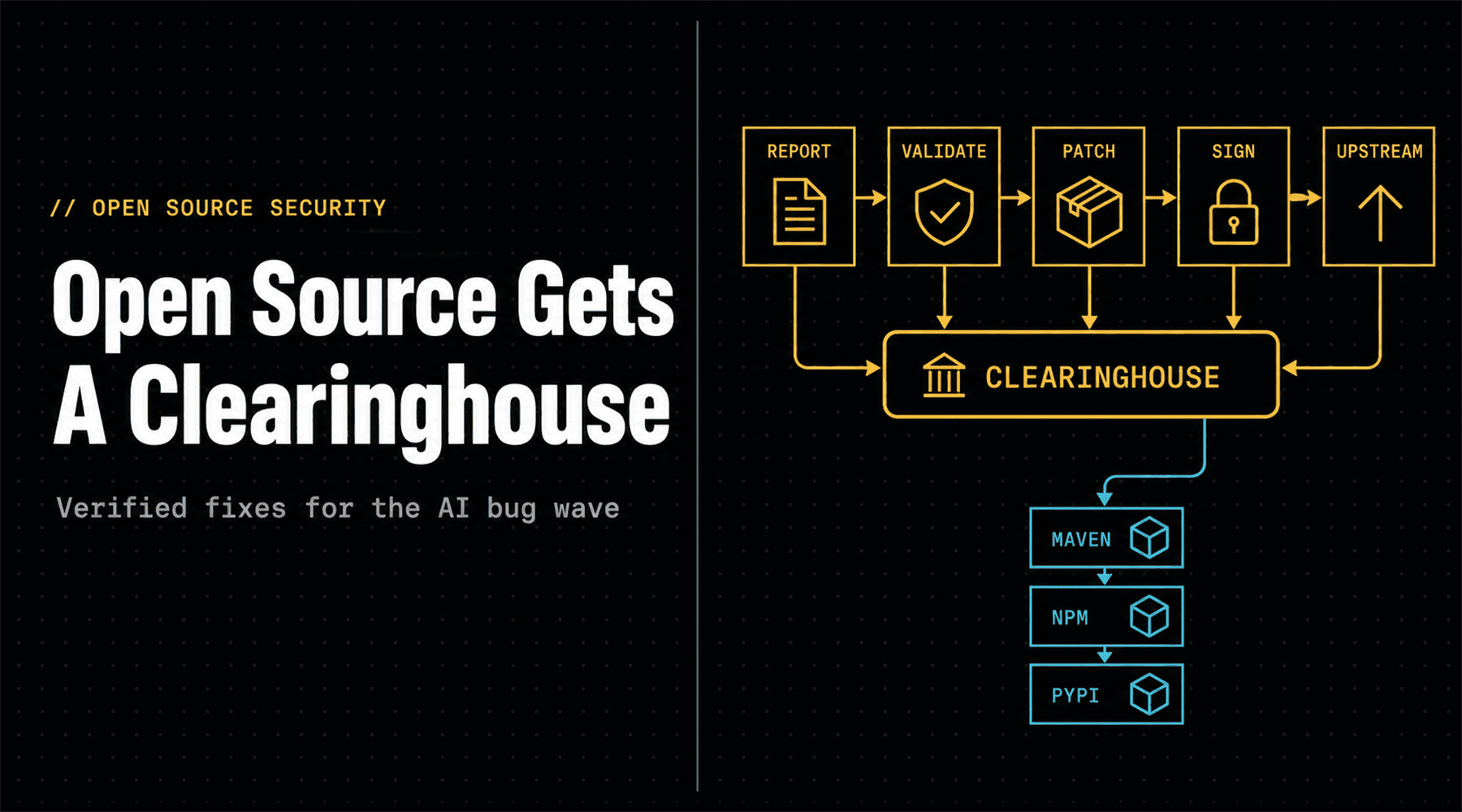
Lightwell is designed to sit between vulnerable software supply chains, enterprise users, and upstream projects. According to IBM, the system will let organizations share sensitive vulnerability reports through an intermediary, receive validated patches for software they already run, and coordinate fixes back to open source maintainers. Its product page says the initial focus includes Maven and Java ecosystems, with expansion planned across PyPI, npm, Go, and other dependency worlds.
That matters because AI is changing the ratio between discovery and repair. Frontier models are getting better at finding security flaws across large codebases. Anthropic's Project Glasswing update put numbers on the problem: its Mythos Preview work surfaced thousands of likely high or critical vulnerabilities in open source, but the bottleneck quickly became verification, disclosure, patch design, and maintainer capacity. Finding more bugs is not the same as absorbing more bugs.
For enterprises, the current dependency model is especially awkward. A scanner can tell a bank, hospital, or cloud platform that a transitive library is vulnerable. The recommended fix may be an upgrade that conflicts with certification, integration testing, runtime behavior, or support policy. If the affected version is old but still embedded in production, the practical need is often a backported, signed, tested patch. That work is expensive, unglamorous, and too important to leave as an exercise for every company to repeat alone.
This is where Lightwell's clearinghouse framing is useful. The open source world already has disclosure norms, security teams, foundations, and maintainers, but it does not have enough coordinated industrial patch capacity for the wave AI may generate. A clearinghouse can reduce duplicate work, protect embargoed findings, package fixes for pinned enterprise versions, and contribute changes upstream when they are ready. It turns patching from a pile of isolated tickets into shared infrastructure.
There are real tensions in that model. Open source communities will not want a large vendor acting like a private gatekeeper over public code. Enterprises will want service-level promises and clean liability boundaries. Maintainers will want fixes that respect project design instead of dumping unreadable AI output into issue trackers. The success test is not whether IBM and Red Hat can sell subscriptions. It is whether the work leaves upstream projects healthier instead of creating a parallel patched universe that only paying customers can see.
The technical direction is still important. Open source security is moving from detection-first tooling toward remediation systems with engineering weight behind them. AI increases the pressure because it lowers the cost of vulnerability discovery for defenders and attackers at the same time. The organizations that win will be the ones that can verify findings, ship fixes, and close the loop faster than the exploit economy can digest the same information.
Lightwell is not a magic shield for the software supply chain. It is a signal that the next phase of open source security is about coordination, patch logistics, and trust distribution. The bug finder got faster. Now the fixing system has to catch up.
Sources: IBM and Red Hat announcement, IBM Project Lightwell product page, Anthropic Project Glasswing initial update, IBM open source AI security baseline framework.
// Discussion
Comments
No comments yet. Start the thread.