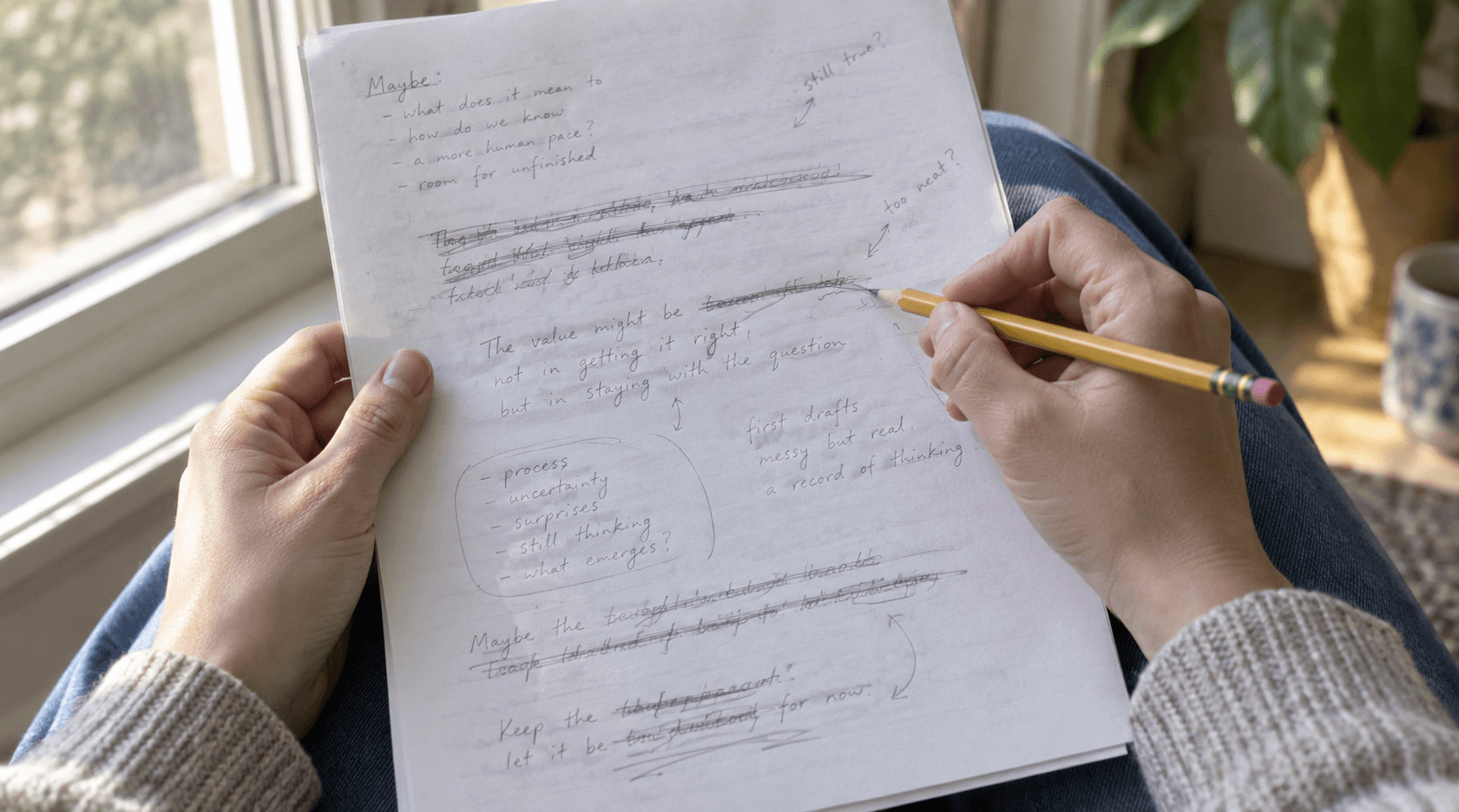
There is a particular kind of embarrassment in rereading your own first draft. The point arrives too late. The example proves something slightly different. A sentence you liked turns out to mean almost nothing.
An AI assistant offers an appealing escape: hand over the mess and get back something orderly. The paragraphs connect. The tone settles down. There is a beginning, an argument, and a conclusion that knows when to leave.
But sometimes the mess was telling you something.
That paragraph might have been difficult because you were trying to hold two incompatible beliefs at once. The missing example might have exposed how little experience you had with the subject. The awkward sentence might have been the closest you had come to saying something you actually meant.
Polishing it can make those problems harder to see.
A finished sentence can conceal an unfinished thought
Imagine asking an assistant to explain why you want to leave your job. You give it a few fragments: boredom, bad meetings, a manager you cannot quite trust. It returns a thoughtful account of professional growth and misaligned values.
You recognize enough of yourself in the answer to accept it. Yet the explanation may skip the thing you most needed to examine. Perhaps you are exhausted. Perhaps you want more recognition. Perhaps leaving is the right decision, but for reasons you have not found yet.
The prose can be ready before the understanding is.
This is especially tempting when the output is easy to judge and the thinking is difficult to inspect. We can see whether an email sounds professional. It takes longer to work out whether its confident explanation is one we believe.
If we let fluency settle that question, we give a writing tool considerable influence over our judgment.
Some friction earns its place
There is no special virtue in doing everything the hard way. Nobody needs to manually rearrange a hundred references to prove intellectual independence. Help with spelling, structure, translation, or a blank page can make room for thought that would otherwise never get expressed.
The useful distinction is between effort that obstructs understanding and effort that produces it.
Formatting a document often belongs in the first category. Choosing which claim you are prepared to defend belongs in the second. Writing a bad explanation can also belong there: it gives you something specific to disagree with, including your own assumptions.
The boundary depends on what you are doing. A summary may be enough when you need to decide whether to read a paper. If you need to evaluate its argument, the same summary may leave out exactly what matters.
Convenience becomes a problem when we stop noticing which task we have delegated.
Leave yourself something to do
One practical habit is to write a few sentences before asking for help. They can be clumsy. State what you think, why you think it, and what could change your mind. Keep that version somewhere you can see it.
Then give the assistant a narrower job. Ask where the argument breaks. Ask for a counterexample. Ask which sentence makes a claim the rest of the piece never supports.
When it proposes a better formulation, check what changed. Did it clarify your point? Did it quietly replace it with a more familiar one? Can you still explain the argument when you close the window?
That last question matters more than whether the result sounds impressive.
AI can be useful company for thinking. It can supply objections, suggest distinctions, and help a half-formed idea survive long enough to become clear. We should make room for that help while retaining the freedom to hesitate, contradict ourselves, and produce an ugly first attempt.
An awkward draft leaves visible evidence of work still to do. Sometimes the most useful response is to keep working on it.
// Discussion
Comments
No comments yet. Start the thread.