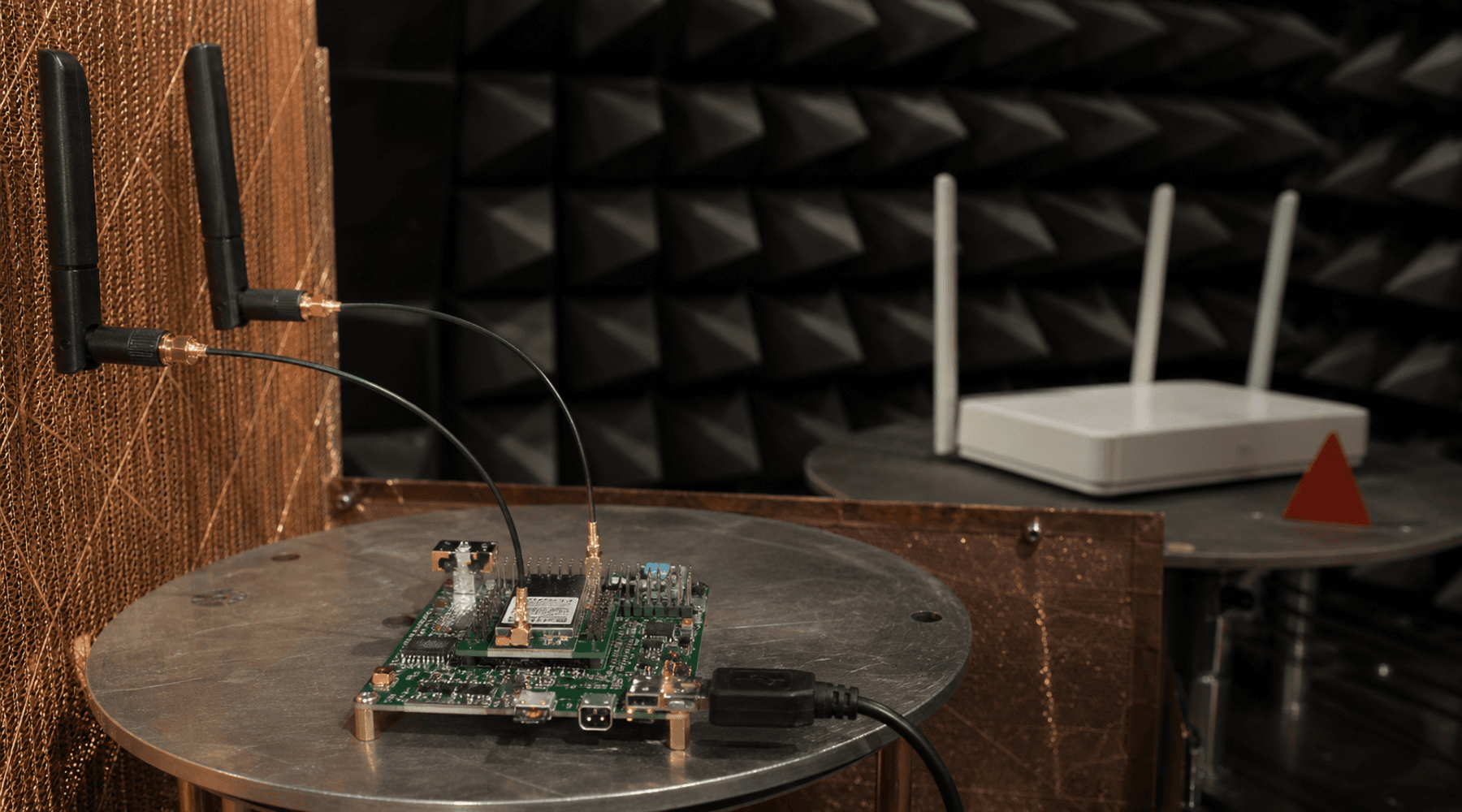
The quiet security work in Linux is often less glamorous than the vulnerability headline. A driver reads a length field. A parser walks a list of information elements. A malformed wireless frame arrives from an access point the machine is trying to join. If the code trusts too much, a tiny embedded chip can drag old memory-safety assumptions into the kernel.
That is the useful part of the Realtek RTL8723BS hardening landing around Linux 7.2-rc3. Phoronix reported on July 12 that this week's staging fixes are largely about tightening the RTL8723BS Wi-Fi driver against bad access points. The driver was not consistently validating headers and payload lengths while iterating over data supplied through over-the-air frames, leaving a set of out-of-bounds read and write paths when the device connected to a malicious Wi-Fi host.
The story is not just one driver getting patched. It is a reminder that radio is input, and input parsers belong on the threat model.
Old Hardware Still Sits On The Edge
The RTL8723BS is not exotic new infrastructure. It is an 802.11 b/g/n SDIO Wi-Fi chipset with Bluetooth 4.0 support that has appeared in tablets, small laptops, embedded boards, and other low-power devices. The driver entered the Linux kernel staging area in 2017 and has spent years getting cleaned up toward the standards expected of non-staging kernel networking code.
That matters because these chips live at the edge of the system. Wi-Fi drivers parse data before the machine has any reason to trust the access point. Beacons, association responses, security information elements, and related management data all come from the air. A normal network path is already hostile enough. A driver that handles frame metadata loosely gives an attacker another place to make the kernel reason past the end of a buffer.
The staging tree now shows a group of Alexandru Hossu patches tagged for staging-7.2-rc3. The commit titles are direct: OOB reads in information-element loops, an OOB read in OnAssocRsp(), an OOB write in HT_caps_handler(), a heap buffer overflow in rtw_cfg80211_set_wpa_ie(), and a WEP length underflow plus OOB read in OnAuth(). One of the commits carries a Cc: stable line, which is the practical signal users care about: this is expected to matter beyond the newest kernel candidate.
Length Checks Are Security Architecture
Parser bugs rarely look dramatic in a diff. A fix may be a minimum-length check before subtracting, an early return when an element is shorter than the fields being inspected, or a bounds check before walking to the next attribute. That is exactly why they are easy to miss. The code compiles. Most access points behave. Normal lab traffic does not necessarily include malformed edge cases.
wireless frame from access point\n -> information element parser\n -> check length before reading fields\n -> reject short or malformed dataFor driver maintainers, the pattern is familiar. Hardware support often starts as vendor code, glue code, or a large staging import that works well enough to make devices usable. Then the long cleanup begins. Naming gets fixed. Dead wrappers disappear. Error paths get made consistent. Eventually the important work is not cosmetic anymore. The driver starts losing old assumptions about what remote inputs are allowed to look like.
That is why staging is valuable even when it is messy. It gives useful hardware a place to work while the code is still being disciplined. The tradeoff is that staging drivers can carry sharp edges for years. The RTL8723BS history is a good example: almost a decade of cleanup, and still enough parsing risk left for a batch of security-relevant fixes.
Bad Access Points Are A Practical Threat
It is easy to treat Wi-Fi driver bugs as niche because they require radio proximity or a user connecting to the wrong network. That is the wrong comfort. Laptops and embedded devices move through airports, hotels, conferences, labs, factories, classrooms, cafes, and customer sites. Access points are cheap. Malformed management data does not need a data-center foothold.
The better mental model is that wireless drivers are internet-facing in a physical sense. They parse packets from strangers before the operating system has a trustworthy relationship with the network. Even when a specific flaw is not known to be exploited in the wild, hardening this surface is worth doing because the attack boundary is close to the hardware and far below ordinary application defenses.
- For kernel users: stable backports matter more than whether the fix first appears in a release candidate.
- For device vendors: staging drivers are not finished just because the hardware works.
- For security teams: wireless management frames are untrusted input, not background noise.
- For maintainers: small bounds checks are part of the platform security model.
The Takeaway
The Realtek RTL8723BS fixes are the kind of patch set that makes Linux safer without changing what users see. The Wi-Fi icon still lights up. The device still joins a network. The difference is that malformed information elements have fewer chances to push the driver outside the memory it was supposed to read or write.
That is not a headline-friendly revolution. It is better than that. It is routine hardening in a place where routine hardening matters. Linux runs on old hardware, cheap hardware, forgotten hardware, and embedded hardware that keeps doing useful work long after the marketing cycle ends. Keeping those drivers honest is infrastructure maintenance.
The lesson for builders is simple: every parser is a perimeter. Sometimes that perimeter is a JSON API. Sometimes it is a Wi-Fi chipset in a small board, listening to the air.
// Discussion
Comments
No comments yet. Start the thread.