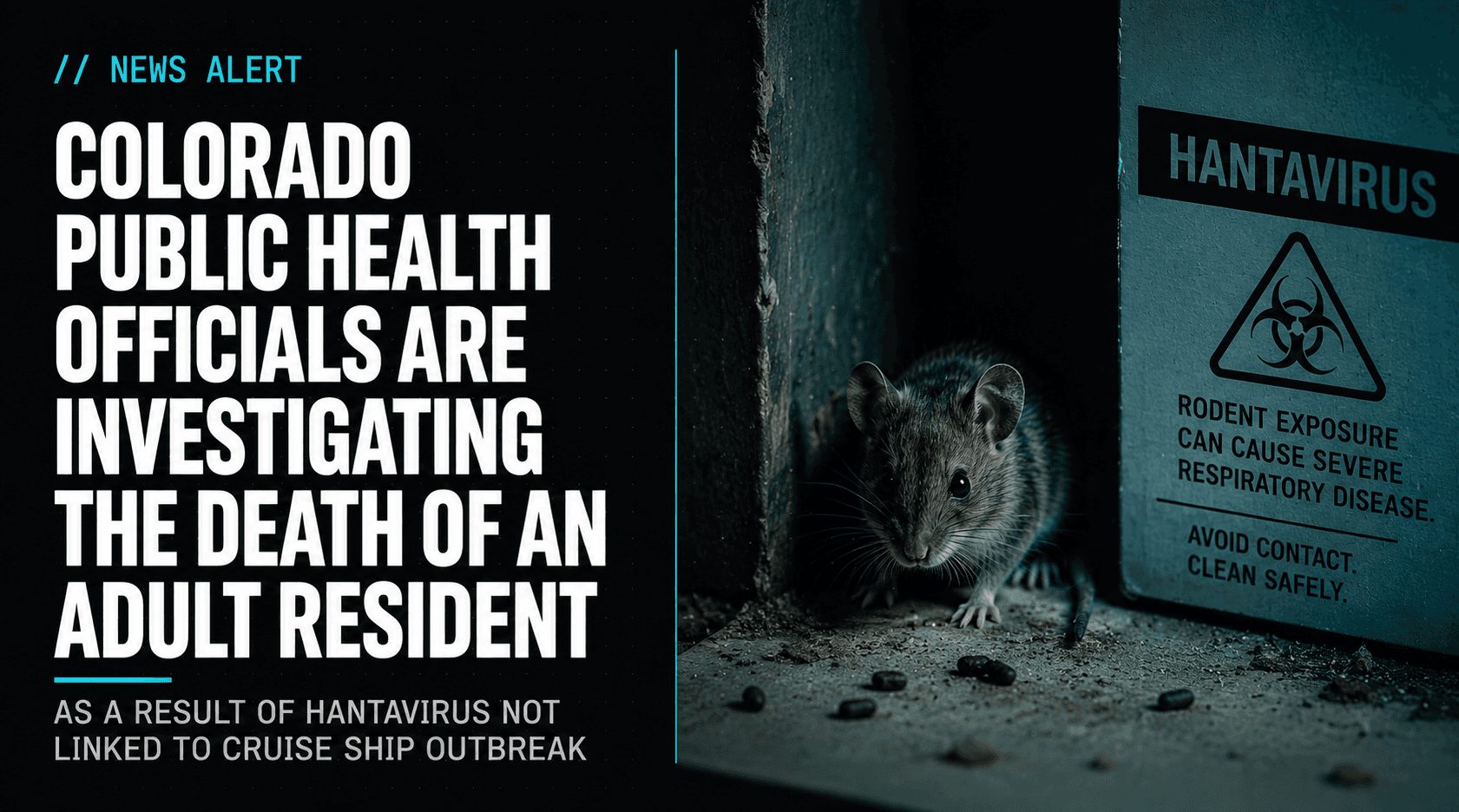
A Colorado adult has died from hantavirus, but state and local health officials say the case is not connected to the recent MV Hondius cruise ship outbreak.
That distinction matters. The word hantavirus is now attached to two separate public-health stories at once: a rare international cruise-linked outbreak and a more familiar local exposure risk in Colorado. Treating them as one story creates confusion. They are not the same event.
The Colorado Department of Public Health and Environment and the Douglas County Health Department are investigating the confirmed death of a Douglas County adult. Officials say the case is not linked to the MV Hondius outbreak. Early reporting indicates the exposure is being investigated locally, with rodent contact as the likely route public health officials are examining.
The local risk is rodents, not cruise travel
Hantaviruses are usually associated with rodents. In the western United States, Sin Nombre virus is the strain most often tied to severe human disease. People can be exposed when virus-containing rodent urine, droppings, or nesting material are stirred up and inhaled, especially in enclosed spaces such as sheds, cabins, barns, garages, or storage areas.
That is why this Colorado case should be read as a practical local-risk story. It is not evidence that the cruise outbreak has spread into Colorado. It is a reminder that the state already has its own seasonal hantavirus risk.
Colorado officials have said Sin Nombre hantavirus infections occur regularly in the state, usually in spring and summer. That timing tracks with more outdoor activity, property cleanup, cabin openings, and contact with areas where rodents may have nested during colder months.
The cruise outbreak is a different situation
The MV Hondius outbreak is different because it has been linked to Andes virus, a hantavirus strain known for rare person-to-person spread after close and prolonged contact. That is unusual among hantaviruses and is one reason public health agencies have monitored exposed passengers closely.
The Colorado case has not been linked to that outbreak. It should not be treated as part of an expanding cruise-ship chain unless officials produce evidence saying otherwise.
That does not make the Colorado death less serious. It makes the public-health message more precise. The risk for Colorado residents is not that a cruise outbreak has arrived. The risk is that hantavirus already exists in local rodent populations, and exposure can happen during ordinary cleanup or outdoor work.
Why hantavirus is taken seriously
Hantavirus infections are rare, but they can become severe quickly. The disease can begin with symptoms that look like many other illnesses: fever, fatigue, muscle aches, headache, chills, nausea, vomiting, diarrhea, or abdominal pain. In serious cases, it can progress to breathing trouble and hantavirus pulmonary syndrome.
That progression is why health officials respond carefully even when the wider public risk is low. A rare disease can still be deadly for the person infected.
The practical takeaway is not panic. It is prevention.
How to reduce risk
The basic prevention advice is straightforward: avoid breathing dust from rodent-contaminated spaces.
- Air out closed spaces before cleaning.
- Do not sweep or vacuum rodent droppings or nests dry.
- Wet contaminated areas with disinfectant before cleanup.
- Wear gloves when handling contaminated material.
- Seal holes and gaps that let rodents enter buildings.
- Store food, pet food, and trash in rodent-resistant containers.
- Seek medical care quickly if flu-like symptoms appear after possible rodent exposure.
Those steps are boring. They are also the point. Hantavirus prevention is less about dramatic public-health measures and more about careful handling of spaces where rodents may have been living.
The bigger lesson
This story is a reminder that public-health context matters.
One hantavirus story involves international travel, cruise-ship exposure, quarantine monitoring, and a strain capable of rare person-to-person spread. The other involves a Colorado resident, local investigation, and the familiar rodent-linked risk that already exists in the region.
Those stories can happen at the same time without being the same outbreak.
The best public-health communication separates them clearly. Colorado residents do not need cruise-ship panic. They need accurate local risk information, careful cleanup habits, and fast medical attention if symptoms follow possible rodent exposure.
That is the useful signal in the noise: this is not a sign that the cruise outbreak has escaped into Colorado. It is a reminder that local ecology still matters.
// Discussion
Comments
No comments yet. Start the thread.